GARDENS OF THE ROYAL PALACE BRUSSELS
Client : Quartier des Arts
Team : TAKTYK
Program : Call for Ideas
Location : Brussels (Belgium)
Surface Area :NC
Cost : NC
Date : 2025
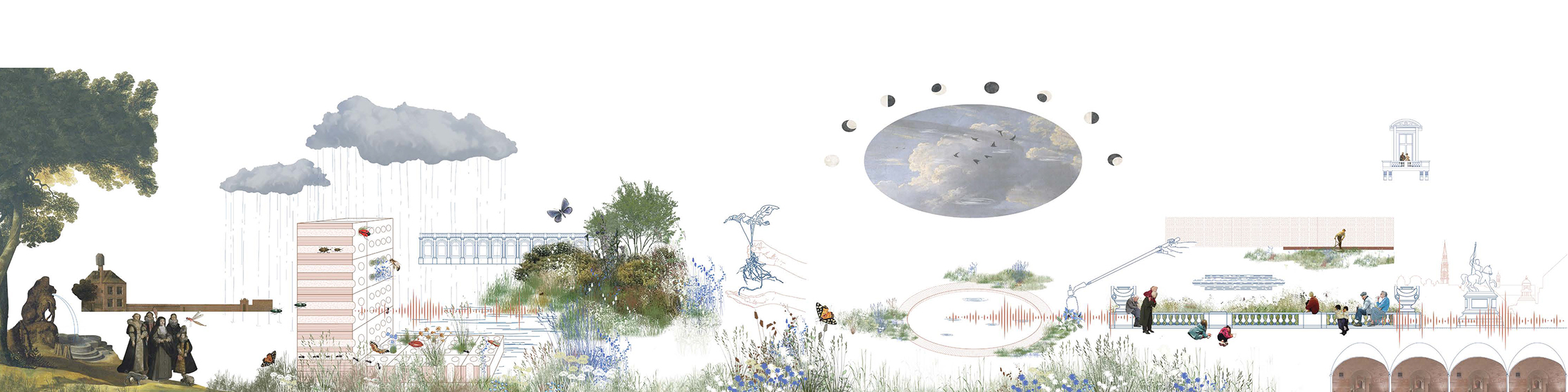
Reinterpreting the Royal Garden as
a living manifesto of coexistence,
exchange, and creolisation.
Jury report:
“The
proposal for this call for ideas draws on a series of concepts: the cosmic
garden, the refuge garden, and the reciprocal garden. Starting from the
observation of the ‘unfinished’ legacy of the gardens in front of the Royal
Palace, designed ‘in the Duchêne manner,’ the reflection continues by avoiding
the creation of a ‘Belgian’ garden, for gardens are hybrid spaces, nourished by
transfer and exchange, ‘at once the smallest parcel of the world and the
entirety of the world’ (Michel Foucault). The inaccessibility of the garden
becomes an opportunity for a ‘plant-centred’ rather than an ‘anthropocentric’
approach.
It is about
caring for plants, accompanying them rather than managing them, listening to
them through all the senses in order to compose a robust, restrained garden
suited to a changing climate. A sensitive and creative dimension is added,
making this garden a curatorial space, particularly through the balustrade of
Place des Palais—a place of exchange between humans and plants, through their
sounds among other things, but also thanks to maintenance teams that bring
together the design office and volunteers.
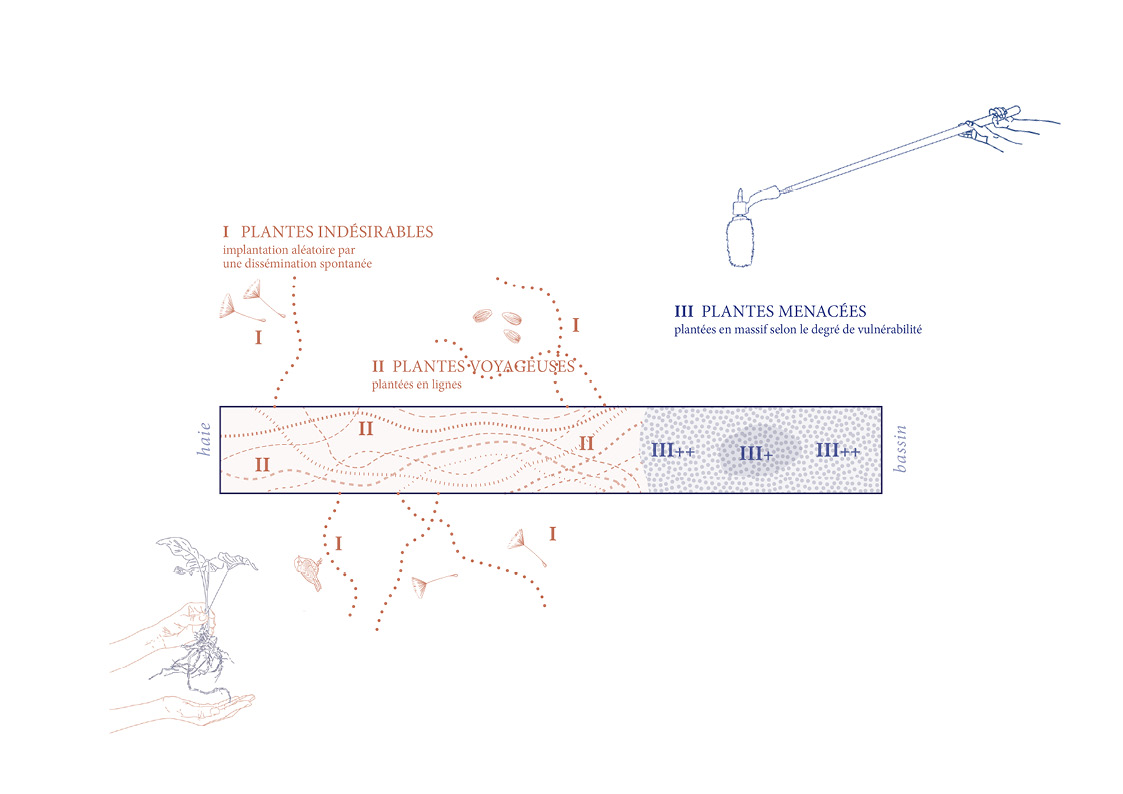
The garden
will be fundamentally evolutionary within a framework structured by the site’s
history. It is a garden that is both sophisticated and experimental to varying
degrees, centred on the wandering of plants and their multiple interactions
with each other, with the site, with their caretakers, with artists and with
the publican aspect that drew the jury’s attention.”
.
Réinterpréter le Jardin Royal comme un jardin Mondes, espace de coexistence, d’échange et de créolisation.
Rapport du Jury
« La proposition pour cette consultation d’idée, fait
référence à une série de concepts : le jardin cosmique,le jardin refuge et le jardin réciproque. Partant du constat
de l'héritage « inachevé »des jardins devant le palais royal, dessinés « à la manière
Duchêne »,la réflexion se
poursuit en ne cherchant pas à faire un jardin « belge » car
les jardins sont métissés,nourris de transferts et d'échanges, « à la fois la plus
petite parcelle du monde et la totalité du monde » (Michel Foucault). L'inaccessibilité du
jardin est une opportunité pour une approche « plantocentrée » plutôt qu' «
anthropocentrée ».
Il s'agit de prendre soin des plantes, de les accompagner
plus que les gérer, d'être à leur écoute par tous les sens pour composer un jardin robuste,
sobre dans le contexteclimatique changeant. S'y ajoute une dimension sensible et
créative, faisant de ce jardin un espace curatorial, en particulier par le biais de
la balustrade de la place des palais, lieu d'échanges entre les hommes et les plantes, par
leurs sons, entre autres,mais aussi grâce aux équipes d'entretien mêlant le bureau
d’études à des volontaires.
Le jardin sera fondamentalement évolutif dans un cadre
structuré par l'histoire du lieu. C'est un jardin à la fois sophistiqué et
expérimental à divers degrés, centré sur le vagabondage des plantes et leurs
multiples interactions entre elles, avec le site, les accompagnateurs, les
artistes et les publics, ce qui a retenu l'attention du jury. »
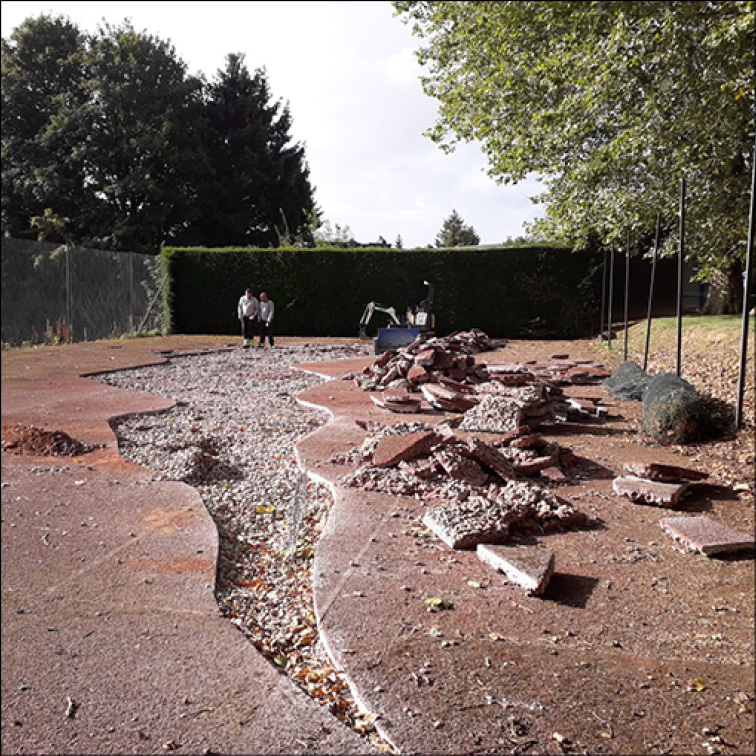 ON SITE
 CO-DESIGN, CO-CONSTRUCT, CO-MAINTAIN
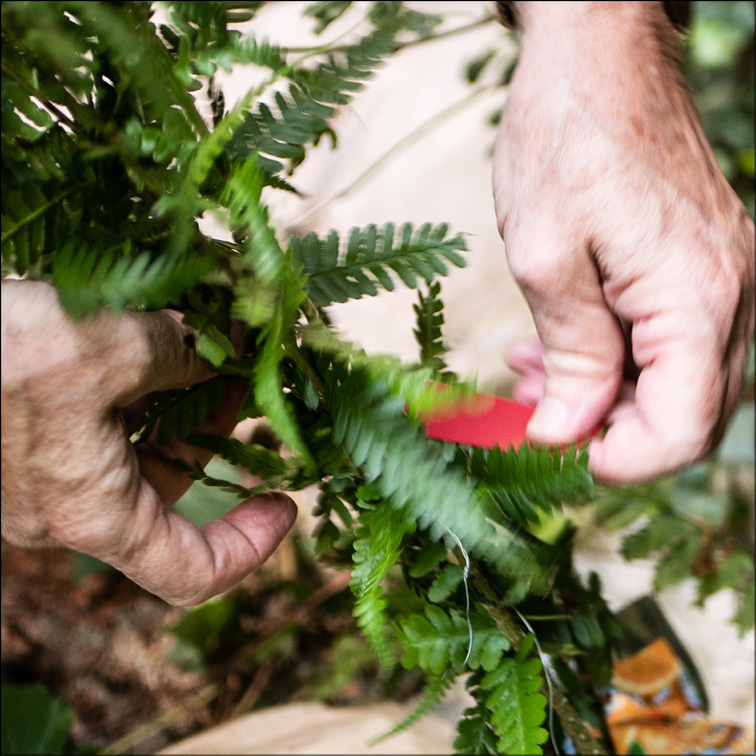 CREATIVE MAINTENANCE